Showing posts with label math. Show all posts

Thursday, October 13, 2016

[Book] Algorithms to live by: The Computer Science of human decisions

Do you like algorithms? And, like me, do you often get confused and frustrated with how to deal with humans in a rational, logical way? And.. Do you often wish there were computer algorithms to deal with human behaviour and interactions? 

If your answer to these questions is No, then don't read this book.


"Algorithms to live by: The computer science of human decisions" attempts to reduce complex, often chaotic human actions and decision-making processes to a set of well-defined mathematical rules. 
For example, how many houses you should look at before deciding which one to buy? (Short answer: 37%). Or which is the best way to sort your books? Or to schedule interviews of candidates so that you get the best person in shortest time? Or how to use the concept of caching to organize your papers in an optimum manner?

The book is full of such examples of how to use the mathematical theories that are commonly used in computer algorithms, into our day to day lives. The authors, Brian Christian and Tom Griffiths, have taken care not to faze and daze the reader with too much jargon, which makes this book an easy read. 

The only complaint I have about this one is: Even after reading 370 pages, I wanted more of it. That, perhaps, is less of a complaint and more of an acknowledgement of how good this book is. 

Sunday, May 17, 2015

[Book] गणिती by Achyut Godbole

Many of my favourite books have been read in the Nagpur-Goa-Nagpur journeys. Last weekend I added "गणिती" by Achyut Godbole to the list. The book made me think about beauty in mathematics. 


In the preface to this book, the author Achyut Godbole brings up an interesting idea: 

Is Mathematics a discovery, or an invention? Laws of physics and chemistry would exist even if there were no humans to measure them. But would algebraic equations and calculus exist without us?

Laws of physics seem to be the same across the universe. Would the mathematics of aliens be same like us?

Thursday, April 26, 2012

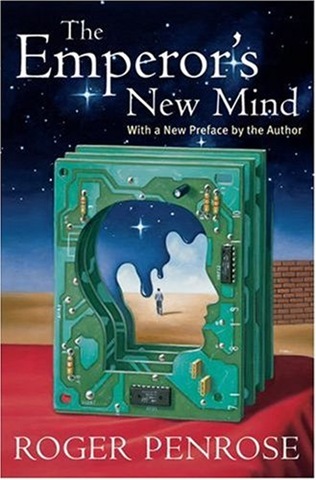
Emperor's New Mind: Roger Penrose


Take a look at these:

Turing machines and Turing Test, artificial intelligence, complex numbers, Mandelbrot set, Gödel’s theorem, Euclidean geometry, Hamiltonian mechanics, special theory of relativity and general theory of relativity, Hilbert space, phase space, Riemann sphere, Schrödinger equation and Schrödinger’s cat, Dirac equation, Heisenberg uncertainty principle, classical physics, quantum mechanics and quantum electrodynamics, Big Bang Theory, entropy, twistor theory, EPR paradox, space-time singularities, quantum gravity, Weyl hypothesis, quantum computers, parallel processing, quasi crystals…

Each one of these topics demands a book of their own; and in fact, there are scores of volumes written on each of these. 

But what if I tell you that there is a single book that covers all of these topics (and many more!) in considerable detail? 

And, that the main theme of this book is neither physics nor cosmology, but the proposition that mind and consciousness are quite beyond the ‘deterministic’ nature of current computer algorithms? 
And, that this book is available just for 300/- (on Flipkart)? 


Welcome to the realm of “Emperor’s New Mind” written by Sir Roger Penrose, FRS.  Sir Roger Penrose is one of the leading mathematical physicists of our times. He has invented ( or as he likes to say, ‘discovered’) a number of concepts in advanced mathematics, (including Penrose triangle, twistor theory, Penrose tilings) and assisted Stephen Hawking in ground-breaking research on black holes, singularities, general relativity and cosmology. 


The author begins with an overview of a wide range of subjects such as Newtonian physics, special and general relativity, the philosophy and limitations of mathematics, quantum physics, cosmology, the nature of space-time, and structure of human brain. In each of the chapters, he describes how these topics relate to the central theme of the book. It is only in the last two chapters of the book that the author presents his hypothesis that human consciousness is non-algorithmic, and thus is not capable of being modeled by a conventional Turing machine-type of digital computer, which is a deterministic system that simply executes well-defined algorithms. 


Penrose observes that current form of computing is dominated by classical mechanics than the probabilistic realm of quantum mechanics, and claims that quantum mechanics will play an essential role in the understanding of human thought and consciousness.


The reader may be forewarned that this book is not for a layperson. As the author freely admits in his foreword, he has made use of equations and formulae unabashedly in the book. Although there are a few chapters, especially those related to mind and consciousness that are somewhat non-mathematical; to appreciate the book in its true depth and form, it is recommended to have a good foundation in physics and math. 


If you are willing to put in a bit of effort in grasping and digesting the truckload of new terms, ideas and concepts that each chapter comes loaded with, this book is a sheer pleasure to read. 

Wednesday, May 25, 2005

A Matter of Chance

Well, here I wish to recommend a book on the probability theory.
A Matter of Chance
By
K. D. Pawte
Publication of Information Directorate,
C.S.I.R.
Probability theory has wide-spread applications in almost all spheres of human endeavor.
Pure Science, Technology, Industries, Military, Management and HR.... all fields make extensive use of a number of mathematical techniques and models to achieve optimum efficiency.It is also has ample significance in our day-to-day life, esp. in sports.
The book gives an introductory approach to various concepts in this expanding field.
It begins with basic definitions such as sample point/space, chance, reliability, relative
frequency, randomness, events, permutations & combinations, operational curve, tree
diagrams,....etc.; moving on to advanced concepts such as conditional probability, Bernoulli Trials, Pascal Distribution, Binomial distribution, Poisson distribution, Gaussian distribution, Markov Process, and so on. Next come the various applications of the probability theory, such as applications in Newtonian Physics, Sensitivity studies, MTBF, MTTF, PERT, Queuing theory, and Operations Research. The last part is devoted to applications in cutting-edge fields such as Genetics and Quantum Theory.
Although the book does require some background in mathematics and statistics, with a little effort any one can make the subject matter easy.