Sunday, August 5, 2012

What they don’t teach you at Harvard Business School

It is funny to see how a book makes itself available to be read by you, even if you may have ignored it time and again. I had purchased “What they don’t teach you at Harvard Business School” almost four years, at my regular roadside vendor in the Deccan area of Pune. It went unread at that time because of the other books I had purchased along with it – I guess a couple of Dan Brown thrillers.

Later, on more than a couple of occasions, I tried to pick up the book for reading, but every time put it down thinking it to be another of those management gospels.

Last week, I visited the local library; and there was this book, silently pleading me to give it a try. I leafed through a few pages, and was instantly captivated by it. So…. No, I didn’t issue the book! I replaced it on the shelf, didn’t take any other book, went home and started reading my owm copy, hehe!

And I finished reading it over a single weekend.


I have not been to Harvard, so I have no idea what stuff they teach there; but this book provides some true street-smart advice. Written by Mark McCormick, who founded the International Management Group (IMG), this less-than-250-pages copy packs a lot of valuable ideas and practical solutions to everyday hurdles faced not only by CEOs and other top-end executives, but also by almost everyone who works in a corporate environment.

The book is divided into three sections: People, Sales and Negotiation and Running a business. Each section has about 4 to 6 chapters each. The author doesn’t waste his time (and the readers’ time) by vexing eloquent on the ideas he wants to share; he quickly gets to the point, shares some interesting anecdotes and then moves on to the next theme.

I enjoyed reading almost all the chapters, even though some of them were targeted towards the sales people or the management; you will always find some interesting insight in each page. My top favourite chapters would be ‘Creating impressions’, ‘Getting ahead’, ‘Timing’, ‘Silence’, and ‘Getting Things Done’.

The edition I have seems quite dated, but almost all the advice seems relevant even today.

Don’t take this book from a library  – buy it! It is worth the every rupee you will spend on it!

Thursday, April 26, 2012

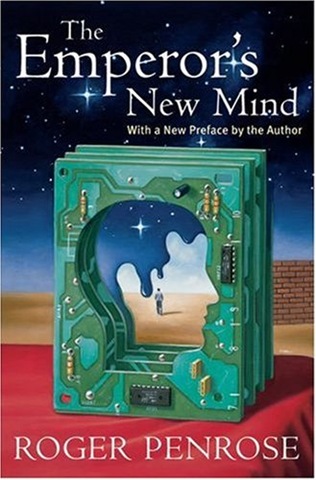
Emperor's New Mind: Roger Penrose


Take a look at these:

Turing machines and Turing Test, artificial intelligence, complex numbers, Mandelbrot set, Gödel’s theorem, Euclidean geometry, Hamiltonian mechanics, special theory of relativity and general theory of relativity, Hilbert space, phase space, Riemann sphere, Schrödinger equation and Schrödinger’s cat, Dirac equation, Heisenberg uncertainty principle, classical physics, quantum mechanics and quantum electrodynamics, Big Bang Theory, entropy, twistor theory, EPR paradox, space-time singularities, quantum gravity, Weyl hypothesis, quantum computers, parallel processing, quasi crystals…

Each one of these topics demands a book of their own; and in fact, there are scores of volumes written on each of these. 

But what if I tell you that there is a single book that covers all of these topics (and many more!) in considerable detail? 

And, that the main theme of this book is neither physics nor cosmology, but the proposition that mind and consciousness are quite beyond the ‘deterministic’ nature of current computer algorithms? 
And, that this book is available just for 300/- (on Flipkart)? 


Welcome to the realm of “Emperor’s New Mind” written by Sir Roger Penrose, FRS.  Sir Roger Penrose is one of the leading mathematical physicists of our times. He has invented ( or as he likes to say, ‘discovered’) a number of concepts in advanced mathematics, (including Penrose triangle, twistor theory, Penrose tilings) and assisted Stephen Hawking in ground-breaking research on black holes, singularities, general relativity and cosmology. 


The author begins with an overview of a wide range of subjects such as Newtonian physics, special and general relativity, the philosophy and limitations of mathematics, quantum physics, cosmology, the nature of space-time, and structure of human brain. In each of the chapters, he describes how these topics relate to the central theme of the book. It is only in the last two chapters of the book that the author presents his hypothesis that human consciousness is non-algorithmic, and thus is not capable of being modeled by a conventional Turing machine-type of digital computer, which is a deterministic system that simply executes well-defined algorithms. 


Penrose observes that current form of computing is dominated by classical mechanics than the probabilistic realm of quantum mechanics, and claims that quantum mechanics will play an essential role in the understanding of human thought and consciousness.


The reader may be forewarned that this book is not for a layperson. As the author freely admits in his foreword, he has made use of equations and formulae unabashedly in the book. Although there are a few chapters, especially those related to mind and consciousness that are somewhat non-mathematical; to appreciate the book in its true depth and form, it is recommended to have a good foundation in physics and math. 


If you are willing to put in a bit of effort in grasping and digesting the truckload of new terms, ideas and concepts that each chapter comes loaded with, this book is a sheer pleasure to read. 

Sunday, February 5, 2012

किमयागार - अच्युत गोडबोले

बहुतेक वेळेस आपण जाणीवपुर्वक चांगल्या पुस्तकांचा शोध घेत असतो. परंतु, काही वेळेस मात्र एखादे पुस्तक ध्यानीमनी नसताना अवचित भेटून जाते.
आमच्या घराशेजारच्या एका वाचनालयाचे सभासद व्हायचे अनेक दिवसांपासून ठरवत होतो. गेल्या आठवड्यात सहज गेलो असता टेबलवरच अच्युत गोडबोले यांचे "किमयागार" पुस्तक दिसले. काही पानं चाळली अन वाचनालयाचा सभासद तर बनलोच, पण ते पुस्तक घेऊनच बाहेर पडलो!


"किमयागार" मध्ये आपल्याला भेटतात मूलभूत शास्त्र शाखा (पदार्थविज्ञान, रसायनशास्त्र, जीवशास्त्र, भूगर्भशास्त्र, खगोलशास्त्र) व त्यांच्या उपशाखांमधे काम करणारे ८००हून अधिक प्रतीभावान शास्त्रज्ञ. आर्यभट्ट, अरिस्टोटल, वराहमिहीरापासून ते स्टीफन हॊकींग, जयंत नारळीकरांपर्यंत. काही विक्षिप्त, काही हेकेखोर, काही मत्सरी, काही संधीसाधू, काही दुर्दैवी... परंतु, सर्वच जण विलक्षण प्रतीभावंत. पण हे पुस्तक म्हणजे नुसतीच शास्त्रज्ञांची निरस जीवनचरीत्रें नव्हे, तर त्यांच्या माध्यमातून लेखक आपल्याला या विश्वाचा इतिहास, रचना व मानवी जीवनाची सुरूवात ऊलगडत नेतात.

पुस्तकाच्या शेवटी असणारी संदर्भग्रंथांच्या यादीवरून नुसती नजर टाकली तरी लेखनासाठी घेतलेल्या परीश्रमांची आपल्याला जाणीव होते.

प्रस्तावनेत लिहिल्याप्रमाणे या पुस्तकावर बिल ब्रायसन याच्या A Short History of Nearly Everything या उत्कृष्ट पुस्तकाचा थोडाफार प्रभाव दिसून येतो, परंतु, दोन्ही पुस्तकांचा मूळ गाभा एकच असला तरी सादरीकरणाची पध्दत मात्र भिन्न आहे.

लेखक श्री. अच्युत गोडबोले म्हणजे एक बहुआयामी व्यक्तीमत्व आहे. पहिली ते IIT पर्यंत प्रत्येक परीक्षेत पहिला क्रमांक पटकाविणारे असा त्यांचा लौकिक असून, IIT मधून रसायन शास्त्रात अभियांत्रिकी पदवी मिळविल्यावर त्यांनी संगणक क्षेत्रात ऊडी घेतली. अनेक बहुराष्ट्रीय कंपन्यांमधून काम करत असताना त्यांनी व्यवस्थापनशास्त्र, शास्त्रीय संगीत, अशा अनेक प्रांतात नुसती मुशाफिरीच नाही केली तर त्या- त्या विषयांचा सखोल अभ्यास करून त्यावर उत्तम पुस्तके लिहीली आहेत. त्यांचे "बोर्डरूम" हे पुस्तक मी पाच वर्षांपुर्वी वाचले आणि ते सुद्धा फारच आवडले होते. आता त्यांचे "नादवेध" हे पुस्तक कधी मिळते त्याची मी वाट पाहात आहे.

"किमयागार"ची काही वैशिष्ट्ये म्हणजे संपूर्ण पुस्तक निव्वळ मराठी भाषेत असून प्रत्येक पानावर शास्त्रज्ञांची दुर्मिळ छायाचित्रे आहेत. जोडीला सुबक, नेटकी छपाई व शेकडो छायाचित्रें यामुळे पुस्तकाचे स्वरूप अधिकच सुंदर झाले आहे. पुस्तकाच्या शेवटी असणारा "नाही रे उजाडत" हा लेख प्रत्येकालाच अंतर्मुख करेल.

आजकाल ४००/- रूपयांत एखादा pizza जेमतेम येतो. त्याच किंमतीत ज्ञान-विज्ञानाची कवाडें सताड ऊघडी करणारे आणि प्रत्येकाच्याच घरात आवर्जून असावे असे हे पुस्तक आहे.

Monday, January 30, 2012

Failure is not an option – Gene Kranz

Two lines have become immortal in the history of spaceflight and mission control. One is, of course, “Houston, The Eagle has landed.” And the second one, “Houston, We have a problem.”

The common factor linking these two events was Eugene F Kranz, the flight director on duty when Apollo-11 landed on the moon, and when Apollo-13 ran into life-threatening problems.

But this book is not just about successful landing of Eagle at Tranquility Base, or about the heroic effort to rescue the lives of three astronauts from the jaws of death. It offers a deep, intense insight into the lives and times of people who remained on the ground yet helped the entire nation achieve its dream of landing a man on the moon. This book is about Mission Control.

Beginning with the first manned flight of Alan Shepard aboard Freedom 7, Kranz narrates the story of all Mercury, Gemini and Apollo missions, covering each flight with considerable detail. We read about the first few disastrous failures, the “four-inch flight”, the string of successes in Mercury and Gemini programs, and the tragic death of Apollo-1 astronauts on the launch pad. We read about the sweat and blood poured by the thousands of people into bringing the space program back on track. We read about the deep thought and meticulous planning that went into each mission. Most importantly, we read about the people who made all this happen.
Obviously, the first lunar landing and the Apollo-13 mission are the highlight of this book. As Neil Armstrong and Buzz Aldrin descend to the lunar surface, Kranz captures the tense moments vividly; and more than once, I had to keep the book aside and take a few breaths to be able to read further. In case of Apollo-13, we are all aware of the major catastrophe (explosion in the Service Module); but there were a number of other equally hazardous problems (lack of water, high-level of CO2), each of which could have resulted in crew loss. 

The best part of this book is that nowhere does Kranz try to hog the limelight. He gives credit where it’s due, heaping praise on each member of his “White Team”. He shares funny lines, hilarious anecdotes and interesting trivia which are known only to those in the inner circles.
More than being just a highly readable book on the history of lunar spaceflight, this book compels us to introspect where we stand with respect to these people. Of course, not all of us can be in the mission control; but each one of us can perform our duties based on the founding principles outlined in this book: Tough, Competent and Disciplined.

Monday, November 7, 2011

Joel on Software

The following article was first published in the October 2011 edition of Orange Byte, the quarterly newsletter published by Nagpur centre of Persistent Systems Ltd.

Joel on Software

-Raghunath Soman

I always look forward to the 1500-km journey to my hometown, Ponda-Goa. Apart from the destination itself, the journey gives me a chance to indulge in one of my passions – reading. Over the last five years, I have read a number of books on these trips, and invariably each of them has turned out to be a memorable one.

The latest entry to this list is an equally illustrious one: Joel on Software (And on Diverse and Occasionally Related Matters That Will Prove of Interest to Software Developers, Designers, and Managers, and to Those Who, Whether by Good Fortune or Ill Luck, Work with Them in Some Capacity),  written by Joel Spolsky.


Since 2000, Joel Spolsky has been writing a wildly popular blog with same name on software development; and this book is a collection of selected articles from the blog, with some additional commentary by the author.

The book is divided in five parts. First part is targeted towards software developers; and it contains tips on best practices in programming and lot of pragmatic advice on how to be a better programmer. Part two talks about how to manage a team of programmers, right from how to interview a candidate to how to measure performance.

Parts three and four have relatively diverse topics, ranging from musings on strategy to a detailed account of API wars. Part five, titled Appendix, contains a selection of questions posted by readers of the blog and Joel’s responses.

It is difficult to handpick one or more chapters as personal favourites, since all the articles are thought provoking, and immensely interesting. Still, some of my personal favourites are:
  • The Joel Test: 12 steps to better code
  • Daily builds are your friend
  • Rick Chapman in search of stupidity
  • Getting things done when you’re only a grunt
  • Strategy letters
  • A Week of Murphy’s Laws
  • How Microsoft lost the API war
 It would suffice to say that whether you are a programmer or you are managing a team of programmers, this is one book you cannot afford to miss.

Apart from the content, much attention has been paid to the presentation of the book, right from the extra-ordinarily long title, and the picture (known as “Colophon”) on title page to large, easy-on-eye font. These minor things add to the joy of reading.

Do pick this one up… you probably may not agree with everything Joel has to say, but one thing I can guarantee for sure – you are in for a few hours of riveting reading.