Monday, May 13, 2013

In the company of Armstrong, Einstein and Jobs

My reading, like all other activities, takes form of a sine wave: there are times when I read feverishly, knocking off a book a week, and then there are times when I do not even read the newspaper. 
Well, the first four months of the year 2013 have been the crest of the wave, so far. Apart from just the number of books, the quality of the material has been outstanding. I plan to review some of these books in a couple of posts. 

In this post, the biographies. 


First Man: Written by James Hansen, this is the only authorized biography of Neil Armstrong, the first person to step on the Moon. Well-researched and written in an engaging manner, this biography reveals the human side of this reclusive man. It also clears a lot of myths, and false rumours that Armstrong chose not to respond to during his life time. A must-read book for all the fans and followers of the space programme.

Einstein: His life and Universe: There are a number of biographies written on this genius -- some of them very good ones indeed -- but the one written by Walter Isaacson is the best by a wide margin. I especially enjoyed the chapters that describe how Einstein came up with various thought experiments that led him on the way to the special and general theories of relativity.

Steve Jobs: Again by Walter Isaacson! Though I am a bit partial towards Bill Gates, I really enjoyed reading about Steve Jobs, one of the prominent visionaries of our times. It is a great fun to read about Jobs's wry remarks about his contemporaries and his equally poignant observations about innovations and ideas. 

Tuesday, September 11, 2012

[Book Review] Last Man on Moon: Gene Cernan


It was an eerie coincidence: I had started reading the autobiography of Eugene Cernan, the last man on the Moon, and the day I finished it, I read the news of sad demise of Neil Armstrong, the first man to step on the Moon.
Eugene Cernan had an illustrious career as an astronaut: he was the second American to do a spacewalk, and as the commander of Apollo 17, he was the last human – as of now – to step off the Moon. In his autobiography, "The Last Man on the Moon", he recounts his childhood, career as a fighter pilot, induction into NASA and his adventures aboard Gemini 9, Apollo 10 and Apollo 17.


Cernan sheds light on a lot of hitherto unknown facts of the moon programme. For example, the details of the plane crash that killed two astronauts or the fact that oxygen tank that ruptured on Apollo 13 was originally fitted on Apollo 10 and was then replaced. He gives interesting profiles of some of the leading men of the Mercury-Gemini-Apollo era: Alan Shepard, Gus Grissom, Neil Armstrong, Buzz Aldrin, Jack Schmidt, and many more. He also gives a good insight into the background events -- social and political -- that affected the Moon missions.


What makes this book a sheer pleasure is Cernan’s very candid, no-nonsense style of writing. The episode of his having to apologize for using “cuss words” during an emergency on Apollo 10 mission is particularly fun to read. His apology went like this:
“To those we hurt, we are sorry. To those who understand, thank you!”
Some of the highlights of the book are Cernan’s mesmerizing depictions of the his spacewalk aboard Gemini 9, the bone-rattling journey aboard Saturn V for the Apollo 10 mission and his brush with disaster aboard the Apollo 10 lunar module. In comparison, he seems ‘dry’ when writing about his own excursion on the Moon aboard Apollo 17.

Unlike some other books, this autobiography doesn't try to portray the astronauts as some out-of-this-world superheroes, but shows them as real men with real feelings, and of course, flaws. Cernan writes at length about the toll that rigorous training programme and the missions themselves took on the family relations of the astronauts, particularly with regards to their wives. While the men toiled hard in simulators and classes all day long, the wives were left to themselves to take care of running the house and looking after the children. It should come as no surprise that after the Apollo programme, a vast majority of the astronauts's wives divorced their husbands.

 This book is a must-read for every space enthusiast interested in the Apollo era.

Sunday, August 5, 2012

What they don’t teach you at Harvard Business School

It is funny to see how a book makes itself available to be read by you, even if you may have ignored it time and again. I had purchased “What they don’t teach you at Harvard Business School” almost four years, at my regular roadside vendor in the Deccan area of Pune. It went unread at that time because of the other books I had purchased along with it – I guess a couple of Dan Brown thrillers.

Later, on more than a couple of occasions, I tried to pick up the book for reading, but every time put it down thinking it to be another of those management gospels.

Last week, I visited the local library; and there was this book, silently pleading me to give it a try. I leafed through a few pages, and was instantly captivated by it. So…. No, I didn’t issue the book! I replaced it on the shelf, didn’t take any other book, went home and started reading my owm copy, hehe!

And I finished reading it over a single weekend.


I have not been to Harvard, so I have no idea what stuff they teach there; but this book provides some true street-smart advice. Written by Mark McCormick, who founded the International Management Group (IMG), this less-than-250-pages copy packs a lot of valuable ideas and practical solutions to everyday hurdles faced not only by CEOs and other top-end executives, but also by almost everyone who works in a corporate environment.

The book is divided into three sections: People, Sales and Negotiation and Running a business. Each section has about 4 to 6 chapters each. The author doesn’t waste his time (and the readers’ time) by vexing eloquent on the ideas he wants to share; he quickly gets to the point, shares some interesting anecdotes and then moves on to the next theme.

I enjoyed reading almost all the chapters, even though some of them were targeted towards the sales people or the management; you will always find some interesting insight in each page. My top favourite chapters would be ‘Creating impressions’, ‘Getting ahead’, ‘Timing’, ‘Silence’, and ‘Getting Things Done’.

The edition I have seems quite dated, but almost all the advice seems relevant even today.

Don’t take this book from a library  – buy it! It is worth the every rupee you will spend on it!

Thursday, April 26, 2012

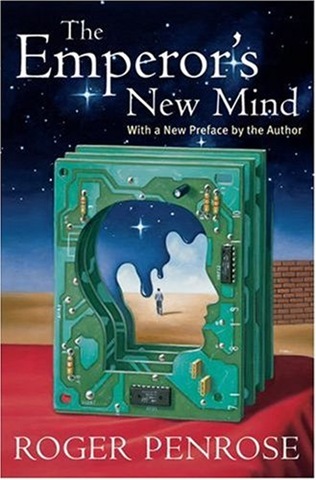
Emperor's New Mind: Roger Penrose


Take a look at these:

Turing machines and Turing Test, artificial intelligence, complex numbers, Mandelbrot set, Gödel’s theorem, Euclidean geometry, Hamiltonian mechanics, special theory of relativity and general theory of relativity, Hilbert space, phase space, Riemann sphere, Schrödinger equation and Schrödinger’s cat, Dirac equation, Heisenberg uncertainty principle, classical physics, quantum mechanics and quantum electrodynamics, Big Bang Theory, entropy, twistor theory, EPR paradox, space-time singularities, quantum gravity, Weyl hypothesis, quantum computers, parallel processing, quasi crystals…

Each one of these topics demands a book of their own; and in fact, there are scores of volumes written on each of these. 

But what if I tell you that there is a single book that covers all of these topics (and many more!) in considerable detail? 

And, that the main theme of this book is neither physics nor cosmology, but the proposition that mind and consciousness are quite beyond the ‘deterministic’ nature of current computer algorithms? 
And, that this book is available just for 300/- (on Flipkart)? 


Welcome to the realm of “Emperor’s New Mind” written by Sir Roger Penrose, FRS.  Sir Roger Penrose is one of the leading mathematical physicists of our times. He has invented ( or as he likes to say, ‘discovered’) a number of concepts in advanced mathematics, (including Penrose triangle, twistor theory, Penrose tilings) and assisted Stephen Hawking in ground-breaking research on black holes, singularities, general relativity and cosmology. 


The author begins with an overview of a wide range of subjects such as Newtonian physics, special and general relativity, the philosophy and limitations of mathematics, quantum physics, cosmology, the nature of space-time, and structure of human brain. In each of the chapters, he describes how these topics relate to the central theme of the book. It is only in the last two chapters of the book that the author presents his hypothesis that human consciousness is non-algorithmic, and thus is not capable of being modeled by a conventional Turing machine-type of digital computer, which is a deterministic system that simply executes well-defined algorithms. 


Penrose observes that current form of computing is dominated by classical mechanics than the probabilistic realm of quantum mechanics, and claims that quantum mechanics will play an essential role in the understanding of human thought and consciousness.


The reader may be forewarned that this book is not for a layperson. As the author freely admits in his foreword, he has made use of equations and formulae unabashedly in the book. Although there are a few chapters, especially those related to mind and consciousness that are somewhat non-mathematical; to appreciate the book in its true depth and form, it is recommended to have a good foundation in physics and math. 


If you are willing to put in a bit of effort in grasping and digesting the truckload of new terms, ideas and concepts that each chapter comes loaded with, this book is a sheer pleasure to read. 

Sunday, February 5, 2012

किमयागार - अच्युत गोडबोले

बहुतेक वेळेस आपण जाणीवपुर्वक चांगल्या पुस्तकांचा शोध घेत असतो. परंतु, काही वेळेस मात्र एखादे पुस्तक ध्यानीमनी नसताना अवचित भेटून जाते.
आमच्या घराशेजारच्या एका वाचनालयाचे सभासद व्हायचे अनेक दिवसांपासून ठरवत होतो. गेल्या आठवड्यात सहज गेलो असता टेबलवरच अच्युत गोडबोले यांचे "किमयागार" पुस्तक दिसले. काही पानं चाळली अन वाचनालयाचा सभासद तर बनलोच, पण ते पुस्तक घेऊनच बाहेर पडलो!


"किमयागार" मध्ये आपल्याला भेटतात मूलभूत शास्त्र शाखा (पदार्थविज्ञान, रसायनशास्त्र, जीवशास्त्र, भूगर्भशास्त्र, खगोलशास्त्र) व त्यांच्या उपशाखांमधे काम करणारे ८००हून अधिक प्रतीभावान शास्त्रज्ञ. आर्यभट्ट, अरिस्टोटल, वराहमिहीरापासून ते स्टीफन हॊकींग, जयंत नारळीकरांपर्यंत. काही विक्षिप्त, काही हेकेखोर, काही मत्सरी, काही संधीसाधू, काही दुर्दैवी... परंतु, सर्वच जण विलक्षण प्रतीभावंत. पण हे पुस्तक म्हणजे नुसतीच शास्त्रज्ञांची निरस जीवनचरीत्रें नव्हे, तर त्यांच्या माध्यमातून लेखक आपल्याला या विश्वाचा इतिहास, रचना व मानवी जीवनाची सुरूवात ऊलगडत नेतात.

पुस्तकाच्या शेवटी असणारी संदर्भग्रंथांच्या यादीवरून नुसती नजर टाकली तरी लेखनासाठी घेतलेल्या परीश्रमांची आपल्याला जाणीव होते.

प्रस्तावनेत लिहिल्याप्रमाणे या पुस्तकावर बिल ब्रायसन याच्या A Short History of Nearly Everything या उत्कृष्ट पुस्तकाचा थोडाफार प्रभाव दिसून येतो, परंतु, दोन्ही पुस्तकांचा मूळ गाभा एकच असला तरी सादरीकरणाची पध्दत मात्र भिन्न आहे.

लेखक श्री. अच्युत गोडबोले म्हणजे एक बहुआयामी व्यक्तीमत्व आहे. पहिली ते IIT पर्यंत प्रत्येक परीक्षेत पहिला क्रमांक पटकाविणारे असा त्यांचा लौकिक असून, IIT मधून रसायन शास्त्रात अभियांत्रिकी पदवी मिळविल्यावर त्यांनी संगणक क्षेत्रात ऊडी घेतली. अनेक बहुराष्ट्रीय कंपन्यांमधून काम करत असताना त्यांनी व्यवस्थापनशास्त्र, शास्त्रीय संगीत, अशा अनेक प्रांतात नुसती मुशाफिरीच नाही केली तर त्या- त्या विषयांचा सखोल अभ्यास करून त्यावर उत्तम पुस्तके लिहीली आहेत. त्यांचे "बोर्डरूम" हे पुस्तक मी पाच वर्षांपुर्वी वाचले आणि ते सुद्धा फारच आवडले होते. आता त्यांचे "नादवेध" हे पुस्तक कधी मिळते त्याची मी वाट पाहात आहे.

"किमयागार"ची काही वैशिष्ट्ये म्हणजे संपूर्ण पुस्तक निव्वळ मराठी भाषेत असून प्रत्येक पानावर शास्त्रज्ञांची दुर्मिळ छायाचित्रे आहेत. जोडीला सुबक, नेटकी छपाई व शेकडो छायाचित्रें यामुळे पुस्तकाचे स्वरूप अधिकच सुंदर झाले आहे. पुस्तकाच्या शेवटी असणारा "नाही रे उजाडत" हा लेख प्रत्येकालाच अंतर्मुख करेल.

आजकाल ४००/- रूपयांत एखादा pizza जेमतेम येतो. त्याच किंमतीत ज्ञान-विज्ञानाची कवाडें सताड ऊघडी करणारे आणि प्रत्येकाच्याच घरात आवर्जून असावे असे हे पुस्तक आहे.